


HUDSON, Fla. — August 2026 — Mark your calendars: on August 22, one of the most iconic pieces of gear in U.S. Navy diving history is going back underwater — at Florida Commercial Diving Institute.
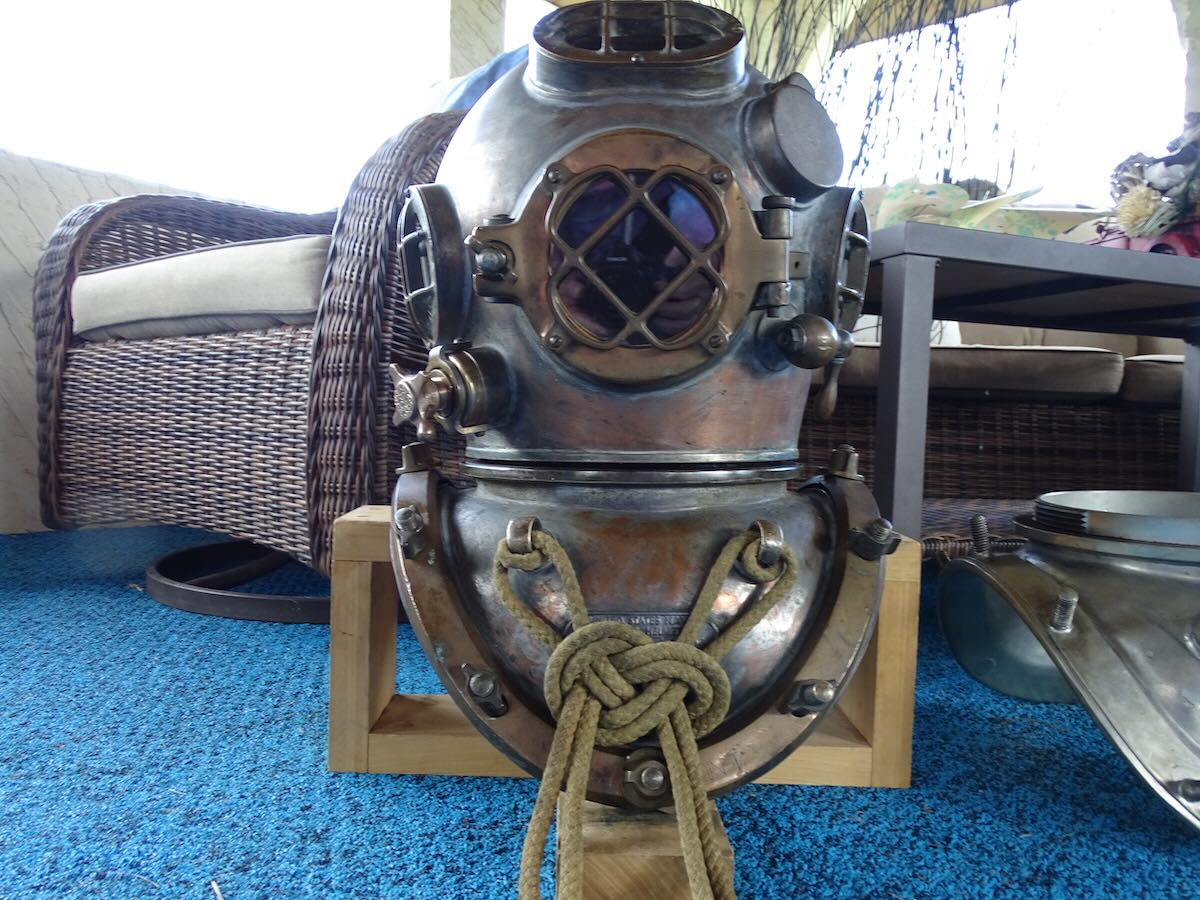
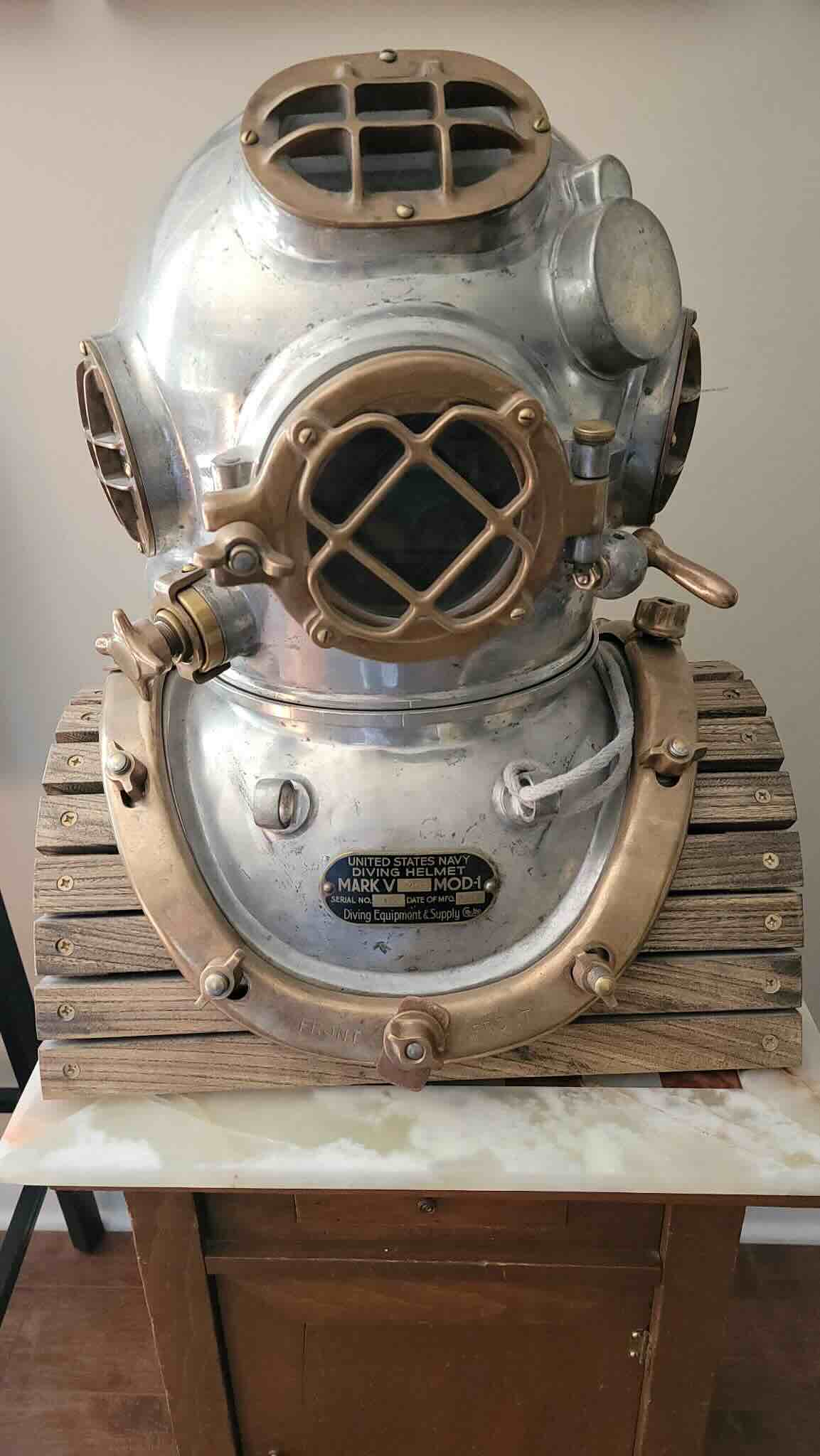
We’re talking about the Mark V diving helmet. Copper dome, canvas dress, weighted boots — the rig that basically is the image most people picture when they hear “old-school Navy diver.” It’s coming to FCDI courtesy of Greg Davis, owner of Classic Diving LLC, who’s providing the equipment and will be on hand for the dive.
And it’s not going on a shelf. It’s not going behind glass. It’s going in the water — with FCDI’s own instructors, several of them former U.S. Navy divers themselves, stepping into it and diving it for real.
A Legend of a Helmet — Straight Out of Navy Service
Make no mistake: the Mark V isn’t a replica, a prop, or a museum reproduction. It’s the real thing — a genuine piece of U.S. Navy diving equipment, developed for the Navy in the early 1900s and adopted as the standard for Navy deep-sea divers for the better part of the 20th century.
For decades, it was THE helmet. Navy divers wore the Mark V on salvage jobs, ship repairs, harbor clearance, submarine rescues — the kind of dangerous, high-stakes underwater work that built the reputation of the U.S. Navy dive community in the first place. Every ping of the wrench on that copper dome, every hour spent breathing through it at depth, is tied directly to the Navy’s own diving history. This isn’t diving history in the abstract — it’s Navy history, full stop.
And here’s the part that really sets this dive apart: the Mark V isn’t just being handled or displayed. It’s still fully functional, working gear. Greg Davis hasn’t kept this helmet preserved to sit still — he’s kept it dive-ready, exactly as it would have been used by a working Navy diver decades ago. When FCDI’s instructors put it on, they’re not stepping into a costume. They’re diving genuine, operational Navy equipment, the same way it was designed to be used from day one.
Modern commercial gear has obviously evolved a long way past it — lighter, safer, wired up with comms and life-support tech the Mark V’s original Navy wearers never had. But make no mistake, this isn’t retired equipment being dusted off for a photo op. It still works. It’s still diveable. And on August 22, it’s going to prove it.
The Guys Who’ve Lived Both Eras
Here’s what makes this dive special: it’s not a costume party. Several FCDI instructors are former U.S. Navy divers, and most days you’ll find them running students through modern surface-supplied systems, current helmets, and comms gear — the stuff their students will actually work in once they graduate.
On August 22, they’re strapping into the Mark V instead.
Decades separate that gear from what they use every day. But the things that actually make a diver good haven’t moved an inch — discipline, communication, teamwork, and trusting the person on the other end of your line. That’s what got Mark V divers through their work, and it’s exactly what FCDI is still drilling into every student who comes through the door.
The Man Behind the Helmet
Credit where it’s due: this dive doesn’t happen without Greg Davis. He originally won this particular Mark V through the Historical Diving Society’s annual raffle back around 2020 — and in the years since, he’s put it to work through his own business, Classic Diving LLC, logging more than 500 dives in it. That’s not a typo. Five hundred dives, in a helmet that’s still doing exactly the job the Navy built it to do.
For Davis, this was never about the money. It’s about keeping this history alive and making sure it stays real — actually dived, not just displayed. That’s why he also has other historic diving helmets available through Classic Diving LLC for those interested in owning a piece of that history themselves.
That track record says everything about the difference between Davis’s approach and the way a lot of historic Navy gear gets treated. Plenty of it ends up behind glass, preserved but permanently retired. Davis’s Mark V isn’t that. It’s maintained as genuine working equipment, capable of doing exactly what it was built by the Navy to do: put a diver underwater and keep him alive and working down there. Loaning it out for dive number 501 at FCDI, instead of a static display, is that philosophy in action — Navy history that still earns its keep.
Old-School Meets Cutting-Edge
FCDI’s Hudson, Florida campus is already a serious training ground — a 260-foot natural sinkhole, a training pond, dive barges, an offshore platform, a hyperbaric chamber, and full commercial surface-supplied systems. It’s where the next generation of divers is being built right now.
Drop a century-old Mark V helmet into that same water, and you get one of the more striking snapshots the industry’s ever going to see — old-school hard-hat diving and cutting-edge commercial training, side by side, on the same day, in the same water. It’s a good reminder that none of today’s gear got here on its own. Every advancement traces back to divers who figured it out the hard way, one dive at a time.
Not Gear for the Faint of Heart
Before anyone gets too romantic about it, it’s worth being straight about what diving the Mark V actually involves — because it’s not for everybody.
The full Mk V dress runs somewhere around 150 to 170 pounds, depending on the weight belt. To dive it, you need to be able to walk the three or four steps from the dressing stool to the stairs, get down the stairs into the water, and then make it back up those same stairs and back to the stool afterward to be undressed. It’s not a swim — it’s a walk, in full gear, both ways.
Getting into the suit in the first place has its own requirement: divers go in through the neck opening of the rubberized canvas suit, which measures about 50 inches around on every suit. If someone’s chest or waist is much bigger than that, there’s little to no chance they’re getting in. And once inside, the breastplate and bonnet still have to go on over the head — so if there’s any doubt about fit, FCDI will test the breastplate before a diver suits up. If it doesn’t fit, the dive doesn’t happen, and the money for it is refunded.
It’s a good reminder of just how physically demanding this equipment was for the Navy divers who wore it for real, day in and day out.
Invite-Only, But Worth Talking About
This one’s a private event — limited to FCDI staff and a small group of invited guests, not open to the public. But that doesn’t make it any less of a big deal. It’s a rare chance to put history, heritage, and hands-on experience in the same place at the same time.
For the instructors stepping back into the Mark V, it’s a full-circle moment with the tradition they came up in. For their students watching from the surface, it’s a front-row seat to just how far this profession has come — and a reminder of exactly whose shoulders it’s standing on.
About Florida Commercial Diving Institute
Florida Commercial Diving Institute (FCDI), located in Hudson, Florida, trains students for careers in commercial diving using professional-grade equipment and real-world training environments, under instructors with hands-on industry experience — including former U.S. Navy divers.
FCDI is ADCI accredited and offers commercial diving and specialized training programs designed to prepare graduates for work in the field.
Train Here. Work Anywhere.
For more information, visit FCDIDiving.com.